Slab Leak Repair in Converse, TX
Every Converse home sits on Houston Black clay and a concrete slab — a combination built to produce slab leaks. We pinpoint them precisely and open only the concrete we must.
Clay Movement Meets Twenty-Year-Old Lines
Converse’s slab leak profile is textbook and getting busier. The city’s dominant housing — slab-on-grade homes from the 2000s and 2010s — carries PEX or CPVC supply lines under and through concrete resting on Houston Black clay, a soil that swells and shrinks with the weather more aggressively than almost any other in America. Two decades of that flexing works on fittings and rub points until one starts to weep.
Foundation leak repair and slab movement are two faces of the same problem here: the clay stresses the slab, the slab stresses the lines, and an established leak then softens the clay further and accelerates settlement. Catching the leak early breaks the cycle — which is why we treat the warning signs below as call-today items, not watch-and-wait items.
How We Pinpoint a Leak Under Concrete
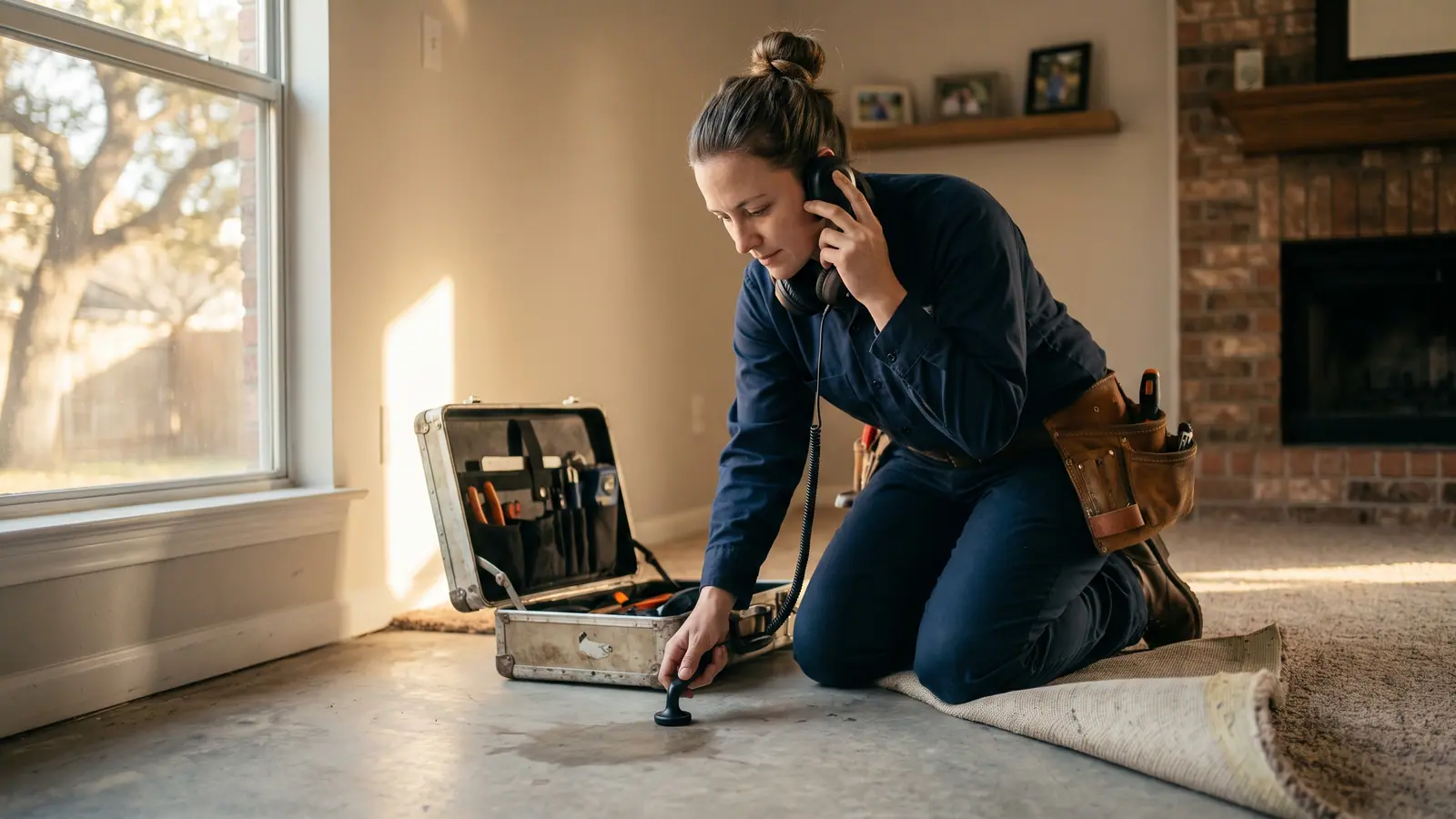
Slab leak detection in Converse starts with evidence you can gather yourself: a water bill that jumped, the meter spinning with every fixture off, warm patches on the floor (a hot-line leak signature), or hairline cracks appearing in tile. From there we isolate hot from cold, pressure-test each side, and pinpoint with acoustic listening equipment and electronic line tracing — all before a saw touches concrete.
Precision is the whole game. A leak located to within a foot means one small, clean access hole; a guess means exploratory demolition across your kitchen. We commit to the tight locate, confirm the leak visually at the access point, and photograph everything for your records and your insurance claim.
Fix the Leak — and Think About the Next One
For a first slab leak in a Converse home, a direct spot repair at the pinpointed location is usually the efficient answer. But we always zoom out: on this soil, a second leak on the same aging manifold is a realistic prospect, and sometimes a reroute — abandoning the under-slab run and feeding the fixtures overhead through walls and attic — is the smarter long-term spend. We lay out both paths with real numbers and let you choose.
Because so many Converse homes are rentals and military-family properties near JBSA-Randolph, we document heavily: detection findings, moisture readings, repair photos, and a written scope that works for insurance adjusters, landlords, and PCS timelines alike. One visit, complete paperwork, no repeat walk-throughs.
Want the full picture of this service — what’s included, how it works, and metro-wide pricing? See our main Slab Leak Repair page. Or explore other work we do in Converse:
Slab Leak Repair in Converse — FAQs
How common are slab leaks in Converse, really?
Common enough to be a core service line for us in 78109. The combination of Houston Black expansive clay — among the most expansive soils in the country — and a citywide stock of 15-to-25-year-old slab-on-grade homes produces steady slab leak work, and volume is rising as the 2000s cohort ages.
What does slab leak detection cost, and is it worth it before repair?
Detection is a modest flat fee and it’s absolutely worth it — it converts an open-ended demolition hunt into one precise access hole. We credit the process into the repair when you proceed with us, and you get the documented locate either way.
Will insurance cover my Converse slab leak?
Typically Texas policies cover access and water damage — opening and restoring the slab and flooring — but not the pipe repair itself. Our detection report, photos, and moisture documentation are formatted to support the claim, and adjusters in this area see our paperwork regularly.
Need slab leak repair in Converse?
Call now for a real ETA to your address.