Leak Detection in San Antonio — Find Hidden Water Leaks Fast
Your SAWS bill doubled, the meter spins with everything off, and nothing looks wet. Somewhere, water is escaping — our job is to find the exact spot without turning your home into a demolition site.
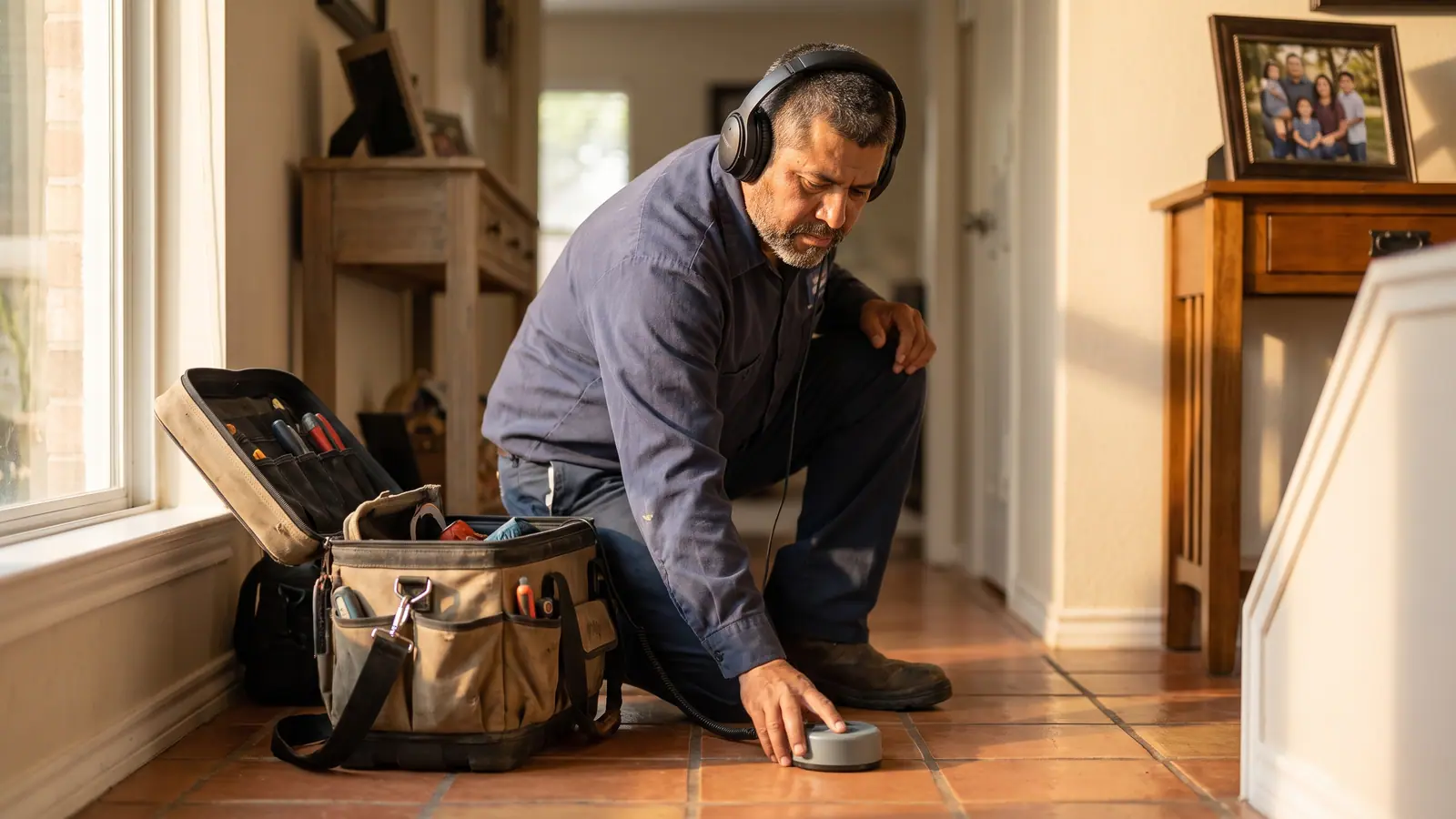
A hidden leak announces itself in sideways clues: a water bill that jumps a tier, the faint hiss of running water at 2 a.m., a warm patch of tile, a cabinet that smells musty, or a meter dial that creeps with every fixture closed. Hill Country Plumbing Pros provides water leak detection across San Antonio and the NE suburbs using tools that listen and look through the structure — acoustic ground microphones that hear pressurized water escaping, thermal imaging that maps temperature anomalies behind drywall and under floors, and meter isolation testing that brackets the leak to a specific section of the system before any equipment even comes out.
Finding leaks here is its own specialty because so much of the plumbing is unreachable by eye. Nearly every home in the metro sits on a slab-on-grade foundation with supply lines running beneath or inside the concrete, and long yard services stretch from meter to house through Blackland clay that swells and shrinks enough to stress buried pipe. Underground leak detection means pinpointing a failure under all of that within a foot or two — the difference between opening one small access point and exploratory jackhammering. The January 2026 freeze added its own caseload: pipes that partially split and have been seeping quietly ever since.
What’s Included
- Whole-system meter isolation test to confirm and bracket the leak
- Acoustic listening survey over slab, walls, and yard lines
- Thermal imaging of floors and walls for hot-line and moisture anomalies
- Underground leak location on yard services and irrigation supply lines
- Precise marked location with depth estimate before any opening is made
- Written findings with photos, suitable for insurance and SAWS leak adjustment
- Repair options priced on the spot if you want the fix scheduled
How It Works
- Confirm the leakWith every fixture off, we watch the meter and isolate sections of the system — house vs. yard, hot vs. cold — until the leaking segment is bracketed.
- Narrow the zoneThermal imaging and pressure behavior shrink the search area: a hot-slab signature, a cool wet patch in the yard, or a wall cavity holding moisture.
- Pinpoint acousticallyGround microphones and listening discs triangulate the escape sound to a marked spot, typically within one to two feet, with an estimated depth.
- Report and decideYou get the location, the evidence, and repair options in writing. Fix it with us, use the report for insurance, or take it to any plumber — it is yours.
What It Costs
Professional leak detection in the 2026 San Antonio market runs $250–$550 for a standard residential locate, with large properties, multiple leaks, or deep yard services at the upper end. We quote the detection as its own flat price — you are paying for an exact answer, and the fee is credited toward the repair if we do the work.
Compare that to the alternatives: guess-and-dig plumbing that opens slab or drywall in the wrong place, or a leak left running that adds $100–$400 a month to a SAWS bill and feeds moisture into flooring and foundation soil. SAWS offers a leak adjustment on qualifying bills once the leak is professionally repaired — our written findings and repair invoice are the documentation that application needs.
$250–$550 for most residential leak locates · credited toward repair
What moves the price
- Leak location: under slab, in-wall, yard service, or irrigation supply
- Property size and length of buried line to survey
- Single leak vs. multiple failures (common after freeze events)
- Accessibility and background noise affecting acoustic work
📘 Related guide: Why is my water pressure low?
Leak Detection FAQs
How do I know if I have a hidden leak?
Check your meter: turn off every fixture and appliance, note the reading or watch the low-flow indicator, and wait 30 minutes. Movement with everything off means water is leaving the system somewhere. A bill jump of thousands of gallons with no lifestyle change is the same message in paper form.
Can you find a leak without cutting holes or digging?
Locating is non-invasive — acoustic microphones, thermal imaging, and isolation testing work from outside the pipe, through slab, soil, and drywall. Once we mark the spot, the repair itself needs one deliberate opening at that location, which is precisely the point: one planned access instead of exploratory demolition.
My water bill spiked but my floors are dry. Where is the water going?
Underground or under-slab leaks can run for months without surfacing — water follows gravity into the soil or the gravel bed beneath the foundation rather than up through your flooring. In Blackland clay that hidden moisture is doubly bad news, because it swells the soil unevenly under the slab. Dry floors rule out very little.
How accurate is acoustic leak detection?
On a pressurized line we typically mark the leak within one to two feet, including under concrete. Accuracy depends on pipe material, depth, and background noise — quiet early-morning appointments genuinely help on tough yard locates. If conditions degrade the acoustic signal, we say so and add tracer methods rather than guessing.
Will SAWS reduce my bill for a leak?
SAWS offers leak adjustments on qualifying residential accounts when a hidden leak caused the spike and has been professionally repaired — generally limited to a set number of adjustments in a rolling period. You will need proof of repair; our written detection findings plus the repair invoice are exactly the package their form asks for.
Need leak detection today?
Call now — talk to a dispatcher, not a phone tree.