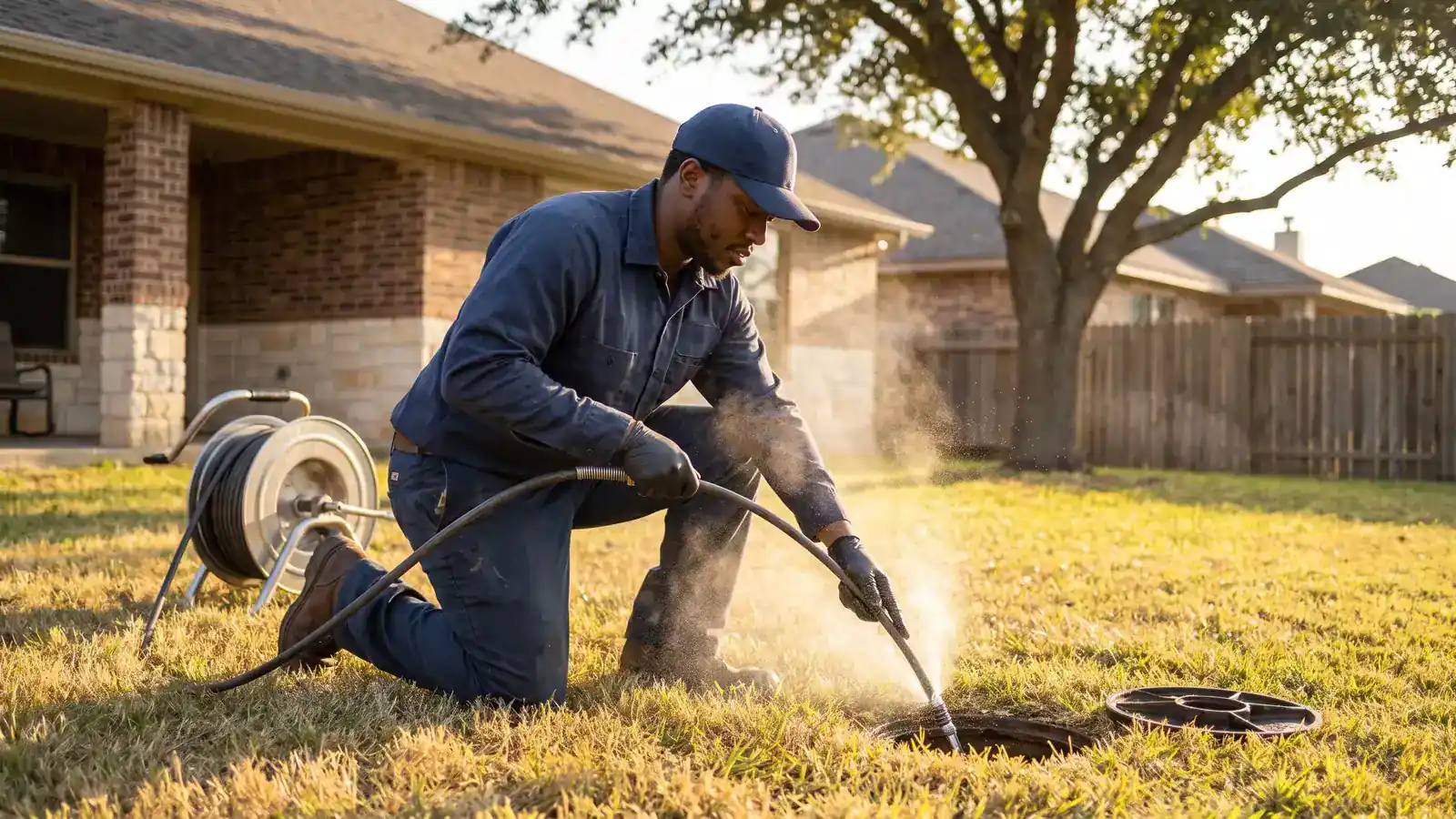
Hydro Jetting in San Antonio — When Snaking Isn’t Enough
A cable punches a hole through a clog; a hydro jet scrubs the pipe wall back to bare pipe. For grease-choked kitchen lines and root-prone sewers, jetting is the difference between relief and a cure.
Hydro jet drain cleaning uses water at 3,000–4,000 PSI, delivered through specialized nozzles that pull themselves down the line while jets scour backward against the pipe wall. Where a cable machine bores a channel through a blockage and leaves the buildup behind, jetting strips grease glaze, shears off intruded roots, flushes settled sludge, and knocks mineral scale off cast iron — restoring close to the pipe’s original diameter. It is the step we recommend when a line has been cabled more than once and the problem keeps coming back.
Two local realities make jetting earn its keep around San Antonio. First, decades of hard-water scale — our supply runs 14–15+ grains per gallon — narrows older cast-iron drains until every grease slick becomes a stoppage. Second, root intrusion through aging laterals in the NE suburbs regrows after cabling, while jetting with a root-cutting nozzle removes the fine root mat cabling leaves behind. We camera the line before jetting to confirm the pipe can take the pressure, and again after, so you see exactly what you paid for.
What’s Included
- Camera inspection before jetting to verify pipe condition and locate the problem
- 3,000–4,000 PSI jetting with grease, penetrator, and root-cutting nozzles
- Full-length scouring of residential sewer laterals and branch drains
- Kitchen line degreasing — the number one repeat-clog line in any home
- Commercial and restaurant grease line jetting on a maintenance schedule
- Post-jetting camera pass with recorded footage you keep
- Written pipe-condition report if repairs are ever worth considering
How It Works
- Camera firstWe inspect the line before quoting. Jetting a collapsed or badly broken pipe makes things worse, so we confirm the pipe is sound and show you what we found.
- Match nozzle to problemGrease lines get a spinning degreasing head, roots get a cutting nozzle, sludge gets a flushing head — the right tool is most of the result.
- Jet the full runWorking from the cleanout, we scour the entire line in passes until the return water runs clean and debris stops washing back.
- Prove it on cameraA second camera pass documents the cleaned pipe wall. You keep the footage — useful for home sales, insurance, and future comparisons.
What It Costs
Residential hydro jetting in the 2026 San Antonio market runs $350–$800 for a typical sewer lateral or kitchen line, driven mainly by line length, severity of buildup, and cleanout access. That is more than a basic cabling — but one jetting frequently replaces the two or three cable visits a chronic line would otherwise need in the same year.
Restaurants and commercial kitchens are quoted per line, with scheduled maintenance jetting priced below one-off emergency calls — a quarterly program costs far less than a Saturday-night backup during dinner service. Where the camera shows damage jetting cannot fix, we credit the inspection toward any repair work you approve.
$350–$800 for most residential jetting jobs
What moves the price
- Line length and diameter — branch drain vs. full sewer lateral
- What is in the pipe: grease glaze, root mass, sludge, or scale
- Cleanout access and how many setup points the run requires
- One-time clearing vs. scheduled commercial maintenance program
📘 Related guide: Sewer line replacement cost guide
Hydro Jetting FAQs
How is hydro jetting different from snaking a drain?
A cable machine drills through the blockage and restores flow, but the grease, scale, and root fragments that caused it stay stuck to the pipe wall and rebuild. Jetting scours the wall itself at up to 4,000 PSI, taking the line back close to its original inside diameter. Snaking treats the symptom; jetting removes the cause.
Is hydro jetting safe for older pipes?
That is exactly why we camera the line first. Sound cast iron and clay handle jetting well at properly regulated pressure, but a pipe that is cracked, badly bellied, or collapsing needs repair, not pressure. If the inspection shows the line cannot take it, we tell you so and quote alternatives instead of jetting anyway.
How long do hydro jetting results last?
A degreased kitchen line commonly stays clear for years with reasonable habits, versus months for a cabled one. Root-prone sewer laterals stay clear longer after jetting because the fine root mat is removed rather than trimmed, though roots re-enter through the same pipe defects eventually — the camera footage tells you whether a permanent repair is worth pricing.
Do you jet restaurant grease lines?
Yes — commercial kitchen drains are one of our core jetting uses. Grease-laden lines from Selma to Seguin get scheduled maintenance jetting, usually quarterly and outside service hours, which keeps you off the emergency-call roulette and helps with grease-trap compliance documentation.
Can jetting clear tree roots completely?
It removes everything growing inside the pipe, including the hair-fine mat a cable cannot grab. What it cannot do is close the cracks and joint gaps the roots came through, so regrowth is a matter of time. The before-and-after footage shows each entry point, which is exactly what you need to weigh spot repair or lining against periodic maintenance.
Need hydro jetting today?
Call now — talk to a dispatcher, not a phone tree.