Sewer Line Repair in San Antonio — Trenchless & Traditional
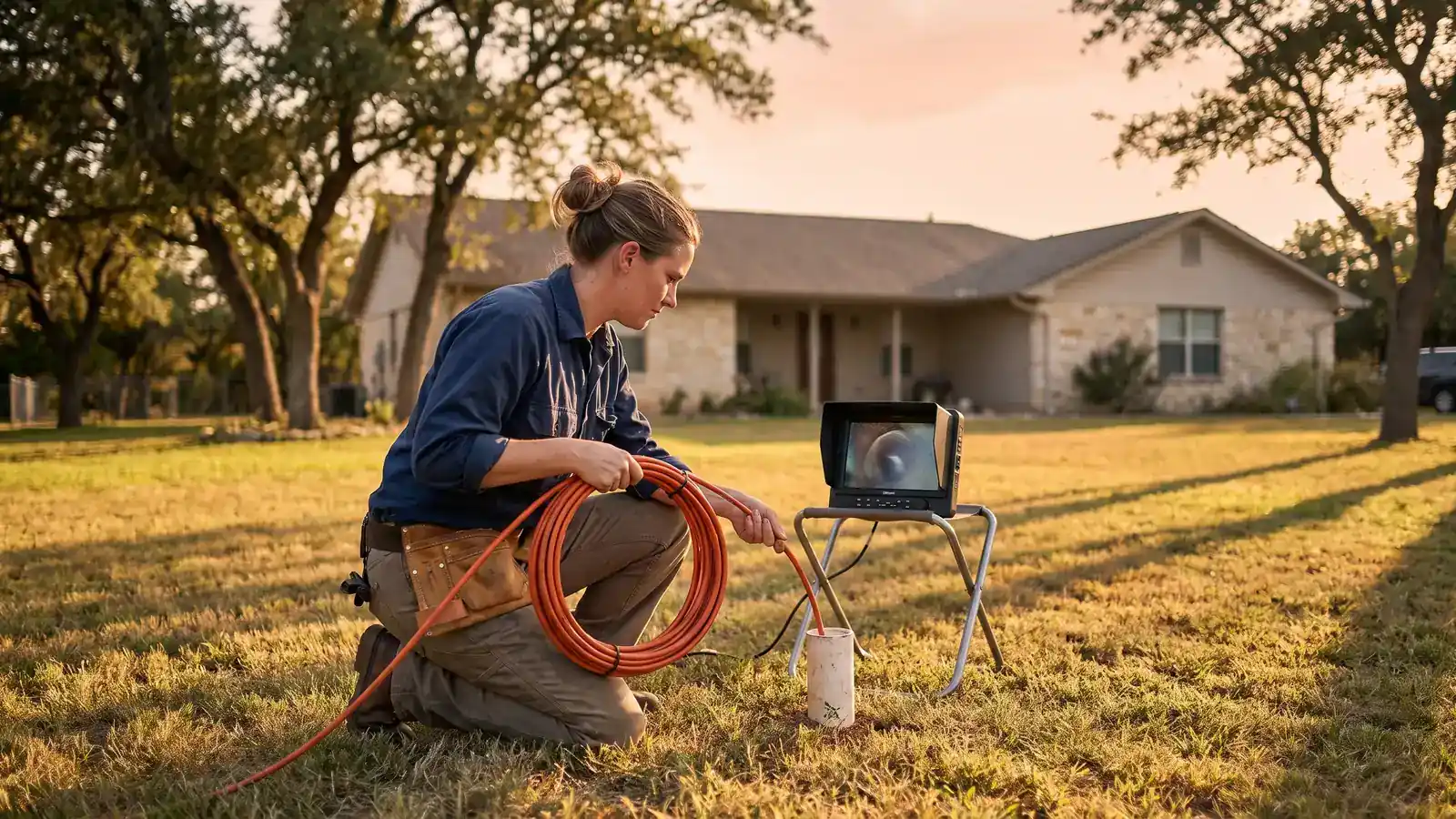
A failing sewer line is a big decision, and it starts with seeing the pipe — not taking anyone’s word for it. Our $99–$149 camera inspection puts the evidence on screen before a single dollar of repair is discussed.
🏷️ $99–$149 sewer camera inspection — credited toward any repair
Sewer laterals around San Antonio fail for predictable reasons. Homes built before about 1980 — a huge share of Universal City, Converse, Live Oak, and older Schertz — drain through cast iron or clay, materials now at or past their design life. Layer on our expansive Blackland clay, which swells with every wet spell and shrinks through every drought, flexing buried pipe until joints separate, and the roots of mature live oaks and hackberries hunting for the moisture inside, and you get the classic local failure pattern: recurring backups, soggy spots in the yard, and a sewer camera inspection that finally explains both.
What sets the repair conversation apart today is that digging up the yard is no longer the default. Trenchless sewer repair — pipe bursting, which pulls a new HDPE pipe through the path of the old one while fracturing it outward, and CIPP lining, which cures a new structural pipe inside the existing run — can replace most laterals through two small access pits instead of a trench through your landscaping, driveway, or patio. Hill Country Plumbing Pros quotes trenchless and open-trench options side by side, with the camera footage in front of you, so the method fits the pipe and the budget rather than the contractor’s preference.
What’s Included
- In-line sewer camera inspection with locating — you watch live and keep the footage
- Trenchless pipe bursting: new seamless HDPE pulled through the old line
- CIPP lining for structurally sound pipe with joint leaks or root entry
- Open-trench excavation and replacement where trenchless is not the right call
- Spot repairs for isolated breaks, bellies, and offset joints
- City permits, inspections, and utility locates handled start to finish
- Warranty in writing on both trenchless and excavated work
How It Works
- Camera and locateFor $99–$149 we run a camera the full length of the lateral, mark defect depths and positions above ground, and hand you the recording — credited toward any repair you approve.
- Options, not ultimatumsYou get written pricing for every viable fix: spot repair, lining, pipe bursting, or full excavation, each with its disruption level and warranty spelled out.
- Repair or replaceTrenchless jobs typically finish in one to two days through small access pits; excavations are shored, inspected by the city, and backfilled with proper compaction.
- Verify on cameraA final camera pass through the finished line documents the result before we close access points — the same standard of proof we started with.
What It Costs
Sewer work spans a wide range because the fixes do: in the 2026 San Antonio market, an isolated spot repair might run $3,000–$6,000, trenchless lining or bursting of a full residential lateral typically lands $8,000–$15,000, and deep, long, or complicated full replacements — under driveways, past 8 feet deep, or with city-main tie-in complications — can reach $25,000. Nobody should quote you a number before a camera has been down the pipe.
That is why we lead with the $99–$149 camera inspection instead of a free estimate that obligates a sale. The footage tells you whether you need a $350 root jetting, a one-day spot repair, or a genuine replacement — and if the answer is "nothing yet, re-check in two years," you will hear that too. The inspection fee is credited in full toward any repair we perform.
$3,000–$25,000 depending on method and scope · $99–$149 camera inspection
What moves the price
- Repair method — spot repair vs. lining vs. pipe bursting vs. open trench
- Length and depth of the lateral, and what sits above it (driveway, patio, trees)
- Pipe material and condition: lining needs a structurally intact host pipe
- Permit, inspection, and tie-in requirements of your specific city
📘 Related guide: Trenchless vs dig: sewer replacement costs
Sewer Line Repair FAQs
What are the signs my sewer line is failing?
Backups that return within months of cabling, gurgling from multiple drains, sewage odor in the yard, unusually green or soggy strips of lawn over the pipe path, and foundation-area dampness. Any two of those together justify a camera inspection — it is a $99–$149 answer to a potentially five-figure question.
What is trenchless sewer repair, exactly?
Two techniques that renew the line without a trench. Pipe bursting pulls a bursting head through the old pipe, fracturing it outward while towing a new seamless HDPE pipe into its place. CIPP lining inverts a resin-saturated liner inside the existing pipe and cures it into a new structural pipe. Both need only small access pits at each end.
Why do sewer lines fail so often in this area?
Age plus soil. Pre-1980 neighborhoods across the NE metro drain through cast iron that corrodes from the inside or clay tile with a joint every few feet — and Blackland clay soil swells and shrinks dramatically with moisture, working those joints open a little more each season. Once a joint gaps, tree roots follow the moisture in and finish the job.
Is trenchless as durable as digging and replacing?
Yes — HDPE from pipe bursting and cured CIPP liners are both rated for 50+ years, are seamless or nearly so, and resist root intrusion better than the jointed pipe they replace. The real question is eligibility: a badly collapsed or back-pitched line may need excavation regardless. The camera determines which category your pipe is in.
Will insurance pay for my sewer line repair?
Standard homeowners policies usually exclude wear-based failure of buried service lines, but many Texas carriers sell an inexpensive service-line endorsement that covers exactly this — check your declarations page before assuming you are bare. Where sudden damage applies, our camera footage and written findings give the adjuster the documentation a claim needs.
Need sewer line repair today?
Call now — talk to a dispatcher, not a phone tree.