Slab Leak Repair in Seguin, TX
Seguin’s slab-era homes sit on some of the most expansive clay in Texas. When that ground moves — and it moves every season — under-slab plumbing pays the price.
Textbook slab leak country
Soil scientists literally use Houston Black clay as the textbook example of expansive soil, and it underlies most of Seguin: 60 to 80 percent smectite clay, plasticity index over 50, swinging through 3 to 6 inches of volume change between wet winters and baking summers. Every swing flexes the slabs poured on top of it, and the water lines cast into or run beneath those slabs absorb the strain at every elbow, joint and penetration.
The homes at risk are Seguin’s slab-era stock: the 1970s–80s houses with under-slab copper or polybutylene, and the thousands of newer PEX-on-slab builds in Mill Creek, Chaparral, Navarro Oaks and the subdivisions still going in. Pre-war pier-and-beam homes largely sit this problem out — their leaks happen in the crawl space, in plain view, which is one genuine advantage of old Seguin construction.
Catching it early — slab leak detection in Seguin
The signs arrive quietly: a water bill trending up on your City of Seguin account, warm tile in a hallway, the hiss of flow in a silent house, a meter that creeps with every fixture off, mildew smell along baseboards, or hairline flooring cracks tracking a hidden line. In this soil, any of these justifies a detection visit — the leak that soaks the clay under your slab is also feeding the very swelling that breaks foundations.
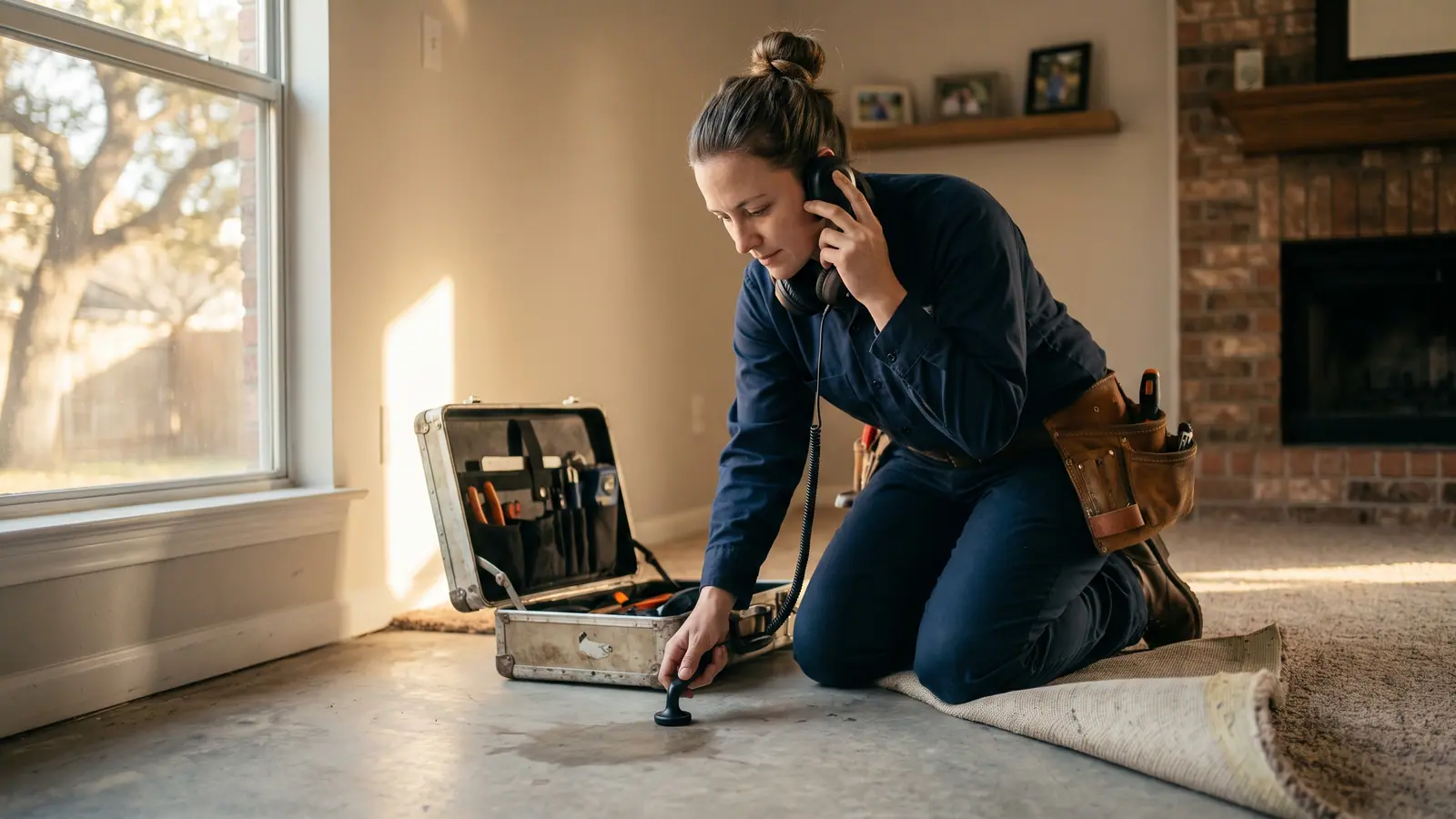
Our slab leak detection in Seguin is instrument-driven: pressure isolation to confirm which system leaks and segment it, acoustic gear to follow the sound through the slab, thermal imaging to expose hot-line leaks under flooring. We mark the location within a foot or two before any talk of opening concrete, and the detection fee is credited when we do the repair.
Fixing the leak — and respecting the foundation
Repair options run from a precise slab opening at the marked spot, to rerouting the failed line overhead through attic and walls, to repiping when a 1970s–80s home shows systemic under-slab pipe failure — polybutylene discoveries in particular end the spot-repair conversation, because that material fails everywhere eventually. We give you each path with its price and its logic, then do the one you choose.
Foundation leak repair in Seguin always carries a second question: what did the water do to the ground? A long-running leak that soaked Houston Black clay causes differential heave — the wet zone swells while the rest of the slab stays put — and plumbing repair alone does not undo that. We document moisture patterns and slab condition as we work, and if what we see warrants a foundation contractor’s opinion, we say so plainly and put it in writing for your insurer.
Want the full picture of this service — what’s included, how it works, and metro-wide pricing? See our main Slab Leak Repair page. Or explore other work we do in Seguin:
Slab Leak Repair in Seguin — FAQs
How common are slab leaks in Seguin?
Common enough that we treat the warning signs seriously here. Seguin sits on Houston Black clay — the textbook expansive soil, moving 3 to 6 inches seasonally — and every slab-on-grade home from the 1970s forward carries under-slab plumbing exposed to that movement. The 70s–80s copper and polybutylene stock leaks most; newer PEX builds resist better but are not immune at fittings.
Will my insurance cover a slab leak in my Seguin home?
Texas policies typically cover sudden water damage and the access work — opening and restoring floors and slab — while the pipe repair itself and gradual-leak damage vary by policy. We support your claim properly: detection findings, photos, cause documentation and a clear invoice separating access from repair. In Seguin’s older slab homes, that documentation often decides how the adjuster classifies the loss.
Can watering my foundation really prevent slab leaks in Seguin?
It genuinely helps. Consistent soaker-hose watering around the perimeter in drought keeps the Houston Black clay from shrinking away from the slab edge — it is the differential movement between bone-dry and soaked zones that stresses slabs and the lines within them. Pair that with pressure regulation under 80 psi and a yearly glance at winter versus summer water bills, and you have covered the three cheapest slab-leak defenses available.
Need slab leak repair in Seguin?
Call now for a real ETA to your address.