Sewer Line Replacement Cost in 2026: What Homeowners Actually Pay
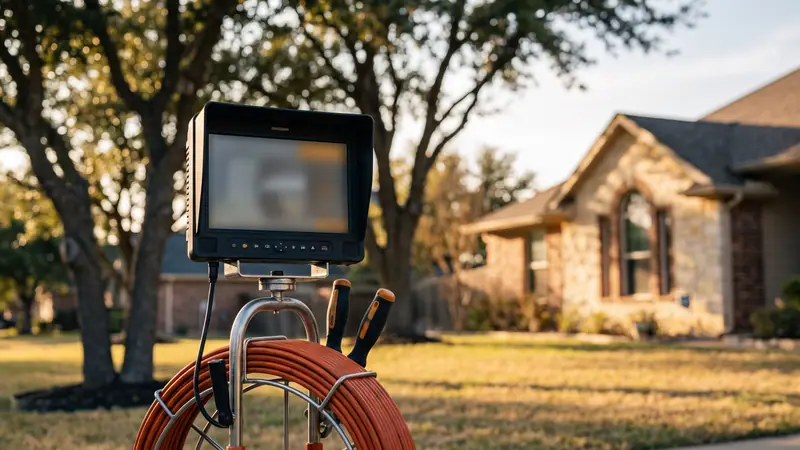
When a plumber says the words “your sewer line needs to be replaced,” the next question is always the same: what’s this going to cost me? Sewer line replacement cost in 2026 runs $50 to $250 per linear foot, and full replacements land anywhere from about $3,000 to $25,000 depending on length, depth, and method — though many straightforward jobs come in well under that ceiling. The honest answer is that the range is wide, because the price depends on how deep the pipe sits, how long the run is, what’s on top of it, and which repair method your situation allows. This guide breaks down real numbers by method, cites where each number comes from, and covers the local factors that make San Antonio-metro sewer lines fail in the first place.
How much does sewer line replacement cost in 2026?
Most homeowners pay $50–$250 per linear foot for sewer line replacement, and national cost trackers put the typical project between roughly $1,250 and $5,300 — with deep, long, or slab-covered runs climbing well into five figures. Bob Vila’s 2026 cost data lists a national average of $2,914 with a typical range of $1,253 to $4,701, while This Old House reports an average of $3,320 and most homeowners paying $1,390 to $5,320.
Why do quotes in the field sometimes run higher than those national averages? Because the averages blend short, shallow, easy-access jobs with hard ones. A typical residential sewer run is 30–60 feet from the house to the city tap. At the sourced per-foot rates, a 50-foot full replacement pencils out to roughly $2,500–$12,500 before permits and surface restoration — and Progressive’s service-line data puts full replacements at $3,000 to $25,000 once the hard cases (deep lines, slab penetrations, street cuts) are included. In our experience across the northeast San Antonio metro, most full residential replacements land in the $4,000–$12,000 window.
Here’s how the four common fixes compare:
| Method | Typical cost (2026, national) | Per-foot cost | Yard disruption | Expected lifespan | Best for |
|---|---|---|---|---|---|
| Spot repair (excavate one section) | ~$2,556 average repair; simple crack repairs average ~$1,050 | n/a (priced per job) | One small excavation | Extends life of existing pipe | A single break or offset joint in otherwise sound pipe |
| Open-trench full replacement | Most jobs $3,000–$13,000+ | $50–$200 per foot | Heavy — full trench along the run | New pipe, decades of service | Collapsed, back-pitched, or badly deteriorated lines |
| Trenchless pipe bursting | Comparable totals to open trench, minus restoration | $60–$200 per foot | Two access pits only | New HDPE pipe, decades of service | Full replacement without destroying the yard |
| Pipe lining (CIPP) | Often the priciest per foot, cheapest on restoration | $80–$250 per foot | Minimal — existing access points | 50-year minimum design life | Structurally intact pipe with cracks, roots, or leaks |
What does sewer line repair cost compared to replacement?
Sewer line repair — fixing a section rather than replacing the whole run — averages about $2,556, a fraction of what a full replacement costs. If a camera shows one bad joint in an otherwise healthy line, a spot repair is often the smart, cheaper play.
The math flips when the damage is spread out. If the camera shows failure along the whole run — corrosion, multiple offsets, roots at every joint — spot-repairing it piece by piece becomes the expensive option over time. Each mobilization, excavation, and patch carries its own overhead, and you’re still left with old pipe on either side of every fix. That’s the judgment call a good sewer line repair contractor should walk you through with footage on the screen, not just a number on a quote.
What does trenchless sewer replacement cost?
Trenchless sewer replacement cost runs $60–$200 per foot for pipe bursting and $80–$250 per foot for CIPP lining in 2026 — usually a somewhat higher per-foot rate than open trench, in exchange for keeping your yard intact. This Old House puts the overall trenchless range at $60–$250 per linear foot.
The two trenchless methods work very differently:
- Pipe bursting pulls a new high-density polyethylene pipe through the old one, fracturing the old pipe outward as it goes. It needs only two access pits — one at each end — so lawn, patio, and driveway mostly stay put.
- Pipe lining (CIPP — cured-in-place pipe) installs a resin-saturated liner inside the existing pipe, which cures into a new, seamless structural pipe within the old one. NASSCO — the trade association that sets standards for this work — states that a properly designed, installed, and tested CIPP lateral has a minimum life expectancy of 50 years. The catch: the old pipe has to still hold its shape. A collapsed or badly deformed line can’t be lined, and lining slightly reduces pipe diameter — rarely an issue for residential flows.
Trenchless vs. open trench: which is cheaper in the long run?
Open trench usually wins on the per-foot rate; trenchless often wins on the total bill, because the quote isn’t the whole cost — excavation and landscaping restoration are. It’s telling that insurers who sell service-line coverage specifically price in excavation work and landscape repair as part of a sewer line claim: digging up and putting back a yard is real money.
Open-trench replacement means excavating along the entire pipe run, removing the old line, and laying new PVC. If the trench passes through sprinkler systems, fencing, sidewalks, mature landscaping, or a driveway section, you pay to restore all of it after the plumbing is done. On a plain grass front yard with a shallow line, open trench is frequently the cheapest total. Under a stamped-concrete patio, it rarely is.
Trenchless methods minimize that surface damage — NASSCO describes CIPP lateral lining as rehabilitating pipes “while minimizing disruption to yards, sidewalks and driveways” — and most residential jobs finish in a day or two.
Open trench still wins outright when the line is collapsed, badly back-pitched (wrong slope — you can’t line a pipe into having correct fall), or when multiple tie-ins and fittings make lining impractical. A good contractor will tell you which methods your line actually qualifies for, and show you the camera footage to prove it.
What drives the price up or down?
Depth, length, what’s on the surface, and where you tie in — those four variables explain why two neighbors can get quotes thousands of dollars apart for “the same job.”
- Depth. Lines buried 2–4 feet are routine. Deeper trenches must be shored for safety and dug slower, and cost climbs fast. The extreme case is pipe under a slab: replacement under concrete runs $300–$350 per foot, several times the open-yard rate.
- Length. More feet, more money. Homes set far back from the street pay more.
- What’s on the surface. Grass is cheap to dig through. Driveways, patios, mature oaks, retaining walls, and pool decks are not. This is where trenchless earns its keep.
- Permits and city tie-in. Sewer work permits typically run $100–$1,000 depending on the municipality, plus inspection and sometimes right-of-way work. If the street must be cut to reach the main, it can run considerably more.
- Labor rates. Plumbers may charge $150–$500 per hour for sewer work, and rates vary by market and by how nasty the access is.
- Emergency timing. A backed-up line on a Saturday night commands premium rates. If your line is failing slowly, scheduling the work beats waiting for the collapse.
Why should a camera inspection come first?
Never approve a sewer replacement without seeing camera footage of your own line — an inspection costs $100–$500 and determines everything that follows. It answers where the damage is, how bad it is, how deep the pipe sits, and whether the line qualifies for trenchless methods. It also protects you from over-scoped quotes: a line with one root-invaded joint doesn’t need a $10,000 replacement.
Sometimes the camera reveals the line isn’t failing at all — it’s just badly clogged with years of grease and roots. In that case, hydro jetting can scour the pipe back to bare walls, and routine drain cleaning keeps it flowing after that. Research compiled by the U.S. Forest Service found that root removal can cost as little as one-sixth of what replacement or renewal due to roots costs — which is exactly why cleaning and maintaining a structurally sound line beats replacing pipe that had life left in it.
How long do cast iron sewer lines last?
Cast iron sewer pipe typically lasts 50 to 65 years, with well-installed lines sometimes reaching 75. That’s the number that matters most in the older northeast San Antonio-metro suburbs — Universal City, Live Oak, Schertz, and the neighborhoods that grew up around Randolph AFB — where homes built before roughly 1980 commonly have original cast-iron drain and sewer lines. A 1965 house is now past even the optimistic end of that lifespan.
Cast iron fails from the inside out: it corrodes, scales up, snags waste, and eventually rots through along the bottom where water sits. Poor bedding, aggressive soil, and grease all shorten its life further. If your home is from the 1960s or 70s and you’re snaking drains every few months, the pipe itself — not what’s in it — is likely the problem.
Why does San Antonio’s clay soil break sewer lines?
Much of the metro sits on Houston Black clay — the official state soil of Texas and one of the most expansive soils in the country — and its constant shrink-swell movement shears joints and cracks buried pipe. The USDA’s official series description documents 40–60 percent clay content, high shrink-swell potential, and surface cracks that open a half inch to four inches wide and a foot or more deep during dry periods. This is the soil of the Blackland Prairie belt that runs down through our area.
Picture what those numbers mean four feet down: every drought-then-downpour cycle — a South Texas specialty — the soil around your sewer line shrinks, cracks, then swells shut again. That movement opens pipe joints, creates offsets and bellies (low spots where waste collects), and snaps rigid pipe. Cast iron and clay tile suffer worst, but even newer PVC lines can pull apart at the joints when the ground moves enough.
The other local aggravator is roots — and the live oaks that make these neighborhoods worth living in are efficient at finding the moisture inside a leaking joint. A U.S. Forest Service review of root intrusion in sewer systems reports that roots cause more than 50 percent of all sewer blockages. Blockages and line breaks are also among the leading causes of the 23,000 to 75,000 sanitary sewer overflows the EPA estimates occur in the U.S. every year — a reminder that a root-choked lateral isn’t just your problem; it’s a sewage-in-the-hallway problem waiting for a wet weekend.
Who pays for the sewer line — you or the city?
In the San Antonio area, the homeowner owns and pays for the sewer lateral on their own property; the utility is responsible for the main and, in some cases, the stretch beyond your property line. SAWS spells this out: if your licensed plumber traces a blockage to a point beyond your property — in the street, alley, right-of-way, or easement — SAWS will clear and repair that portion, and you may be eligible for reimbursement of the locating charges if your plumber marks the spot and follows their documented procedure.
Two practical takeaways. First, before you approve any replacement quote, make sure the plumber has electronically located where the problem actually sits — if it’s past your property line in SAWS territory, that’s not your bill. Second, if you’re in a suburb served by its own utility (Schertz, Cibolo, Universal City, and New Braunfels each run their own systems), the same general split — homeowner owns the lateral, city owns the main — typically applies, but confirm the exact boundary with your utility before digging.
Will homeowners insurance cover sewer line replacement?
Usually not — standard homeowners policies treat sewer line failure from age, corrosion, roots, or soil movement as excluded wear and tear, and water backup damage is not covered without an added endorsement. Better to know that before you’re standing in a flooded hallway.
Two add-ons are worth asking your agent about:
- Water/sewer backup coverage pays for interior damage when a backup pushes sewage into the house. It typically costs about $50–$250 per year depending on the limit — cheap next to a gutted hallway, given that water damage ranks among the most costly homeowners claims.
- Service line coverage is an endorsement that covers repairing or replacing the buried lines themselves — sewer, water, and other utilities — including the excavation work and landscaping damaged during the repair.
Neither is automatic, and sudden accidental damage (say, a contractor severing the line) is handled differently from gradual failure. Check your policy before you need it, and keep documentation — camera footage helps here too — if you ever file a claim.
Need help in the San Antonio area?
If your drains are backing up or you’ve been told your sewer line is failing, get a second opinion with a camera before you commit to a five-figure repair. Hill Country Plumbing Pros serves Schertz, Cibolo, Universal City, New Braunfels, and the greater northeast San Antonio metro with honest camera inspections, spot repairs, and full trenchless and open-trench replacement. Call (210) 555-0199 or visit our Sewer Line Repair in San Antonio page to get a straight answer on what your line actually needs.
References
- This Old House — How Much Does Sewer Line Replacement Cost? (2026)
- Bob Vila — Sewer Line Replacement Cost (2026 data)
- Progressive — What Is Service Line Coverage?
- NASSCO — Pipe Rehabilitation (CIPP standards and design life)
- U.S. Forest Service — Tree Root Intrusion in Sewer Systems: Review of Extent and Costs
- EPA — Sanitary Sewer Overflows (SSOs)
- USDA NRCS — Official Series Description: Houston Black
- Balkan Plumbing — What Is the Life Expectancy of Cast Iron Sewer Pipe?
- San Antonio Water System — Plumbing Backed Up? (lateral responsibility and reimbursement)
- The Hanover Insurance Group — Answers to Your Questions About Water Backup Coverage