How Much Does a Plumber Cost in 2026? Rates, Fees, and Job Prices
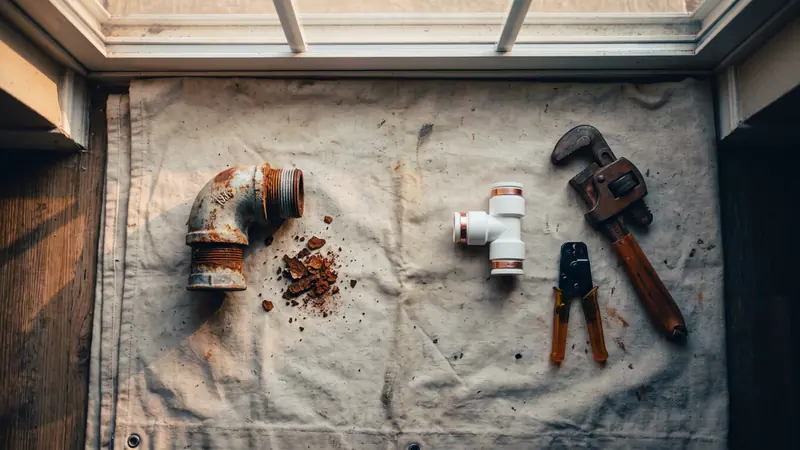
How much does a plumber cost? In 2026, most homeowners pay $75–$150 per hour for a licensed plumber, or $175–$500 for a typical small repair billed at a flat rate, with a service call fee of $50–$150 to get someone to your door. Those are the honest headline numbers — but they hide a lot of nuance. Who’s actually showing up, how the company structures its pricing, when you call, and what they find behind the wall all move the final bill. This guide lays out real 2026 rates, prices for ten common jobs, and — just as important — how to compare quotes so you’re comparing apples to apples.
Plumber Hourly Rate in 2026: Who’s Turning the Wrench Matters
“Plumber” covers three license levels, and the plumber hourly rate scales with each:
- Apprentice: $45–$90/hour. In training, works under supervision. You’ll rarely hire one directly, but on hourly jobs a crew may include an apprentice at a lower blended rate.
- Journeyman: $75–$150/hour. Fully licensed for most residential work. This is who handles the majority of home service calls.
- Master plumber: $100–$200+/hour. The highest license, required in Texas to run a plumbing company and pull certain permits. Complex diagnostics, gas work, and code-heavy jobs justify the rate.
San Antonio-metro rates generally sit near the middle of those national ranges — a bit below Austin, well below coastal metros. Expect roughly $80–$140/hour for a journeyman on standard residential work in Schertz, Cibolo, Universal City, or New Braunfels.
What Is a Plumber Service Call Fee?
The plumber service call fee — sometimes called a trip charge or dispatch fee — is what you pay for a licensed pro to come out, look at the problem, and diagnose it. In 2026 it typically runs $50–$150. It exists because the truck, fuel, insurance, and the plumber’s time cost money whether or not you approve the repair.
Three things to ask before booking:
- Is the fee waived or credited if I approve the work? Many reputable shops apply it toward the repair.
- Does the fee include any diagnosis, or is diagnosis billed separately? Camera inspections and leak detection usually cost extra.
- Is there a separate after-hours dispatch fee? Nights and weekends often carry a higher trip charge on top of premium labor.
A “free estimate” usually means free for quoted replacement work (a water heater, a repipe) — not free diagnosis of a mystery leak. That distinction trips up a lot of homeowners.
Flat-Rate vs. Hourly: Which Is Better for You?
Most residential plumbing companies now use flat-rate (upfront) pricing: the plumber diagnoses the problem, quotes a fixed price from a price book, and that’s what you pay regardless of how long it takes. Hourly billing — rate times time, plus materials — survives mostly for diagnostics, remodels, and open-ended problems.
Flat rate protects you when a “simple” job goes sideways: if the valve fights back for three hours, that’s the plumber’s problem. The trade-off is that flat-rate books price in some risk, so a fast, easy job can cost more than it would hourly. Hourly can be cheaper for genuinely quick fixes, but you carry the overrun risk.
The practical rule: for defined jobs, get the flat quote in writing before work starts. For hourly work, get the rate, the trip fee, the minimum charge (often one hour), and an estimated range — also in writing.
What Common Plumbing Jobs Cost in 2026
Here’s what homeowners are actually paying, nationally and in the San Antonio metro:
| Job | National range (2026) | San Antonio metro typical |
|---|---|---|
| Unclog a drain (single fixture) | $125 – $350 | $130 – $300 |
| Clear a main line clog | $250 – $800 | $250 – $600 |
| Fix a running toilet | $100 – $300 | $110 – $250 |
| Replace a toilet | $250 – $600 | $275 – $550 |
| Replace a kitchen faucet | $175 – $400 | $180 – $375 |
| Replace a garbage disposal | $250 – $600 | $250 – $500 |
| Replace a pressure-reducing valve (PRV) | $250 – $650 | $250 – $550 |
| Repair a leaking pipe (accessible) | $200 – $700 | $200 – $600 |
| Replace a 40–50 gal tank water heater | $1,300 – $3,000 | $1,400 – $2,800 |
| Replace a main water shutoff valve | $200 – $600 | $200 – $500 |
Two local notes. First, our hard water — 14–15+ grains per gallon across much of the northeast metro — shortens the life of water heaters, fill valves, and faucet cartridges, so these repairs come up more often here than in soft-water regions. Second, if a drain keeps clogging, repeated one-off clearings get expensive fast; professional drain cleaning with a camera look can find the underlying cause instead of billing you for the same symptom every few months. And if a water heater replacement is on your horizon, our water heater replacement cost guide breaks that big-ticket item down in detail.
What Makes the Price Go Up
The quote you get can land above the ranges in the table for legitimate reasons:
- After-hours and emergency calls. Nights, weekends, and holidays typically run 1.5–2x standard rates. A burst pipe at 2 a.m. during a freeze event — as thousands of local homeowners learned in February 2021 and again in the January 2026 arctic outbreak — is the most expensive time to meet your plumber.
- Access. A water heater in a tight attic, a pipe under a slab, or a valve behind finished tile takes longer and may require drywall or concrete work.
- Code upgrades. When equipment is replaced, Texas code may require bringing the installation current: expansion tanks, pans and drains, seismic straps, updated venting, or a permit and inspection. These aren’t upsells — they’re the law, and a quote that skips them isn’t really cheaper.
- Parts quality. Builder-grade versus pro-grade fixtures can swing a job by hundreds of dollars. Ask what’s being installed.
- Hidden damage. Corroded fittings, rotted subfloor, or previous DIY work discovered mid-job can expand the scope. A good plumber stops and re-quotes before proceeding.
How to Compare Plumber Quotes Fairly
Three quotes with three different numbers aren’t comparable until you normalize them. Check each quote for:
- Scope. Does it include haul-away, permits, code items, and wall/floor patching — or exclude them?
- Parts. Same brand and grade of fixture or heater? A $400 gap often lives here.
- Warranty. Labor warranty length (1 year is standard, 2+ is strong) and who handles manufacturer warranty claims.
- License and insurance. Verify the company’s license (searchable on the Texas State Board of Plumbing Examiners site) and ask for proof of liability insurance.
- Total, not rate. A $95/hour plumber who takes four hours costs more than a $140/hour plumber who takes two. Judge the bottom line for the defined scope.
The cheapest quote is only the best quote if it covers the same work to the same standard.
Red Flags When Hiring a Plumber
- Quotes given over the phone, sight unseen, for anything beyond trivial work
- Big cash discounts, or pressure to decide “today only”
- No license number on the truck, website, or invoice
- Vague, one-line estimates with no scope breakdown
- Demands for large upfront payment on small jobs
- No permit for work that clearly requires one (water heaters, gas lines, repipes)
- A diagnosis that jumps straight to the most expensive fix with no evidence — for sewer or slab work especially, insist on seeing the camera footage or test results
Need help in the San Antonio area?
If you’d rather skip the guesswork, Hill Country Plumbing Pros gives homeowners across Schertz, Cibolo, Universal City, New Braunfels, and the northeast San Antonio metro upfront, written pricing before any work begins — no surprises on the invoice. Call (210) 555-0199 or Get a Free Estimate and we’ll tell you exactly what your job should cost.